
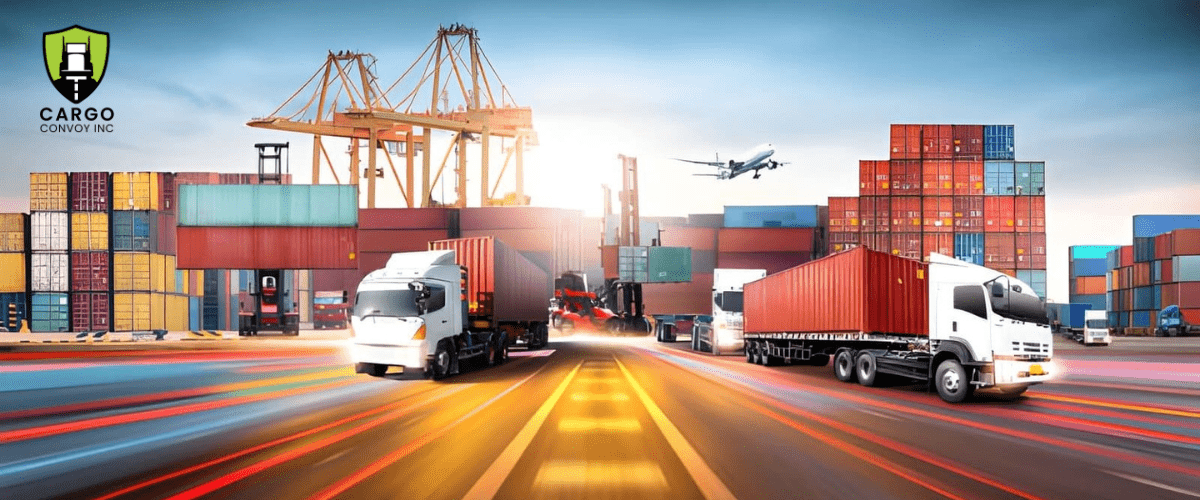
The selection of the appropriate mode for shipping your products will ensure that you get them to their destination promptly and effectively. Failure to select an appropriate shipping method might delay the delivery and even increase your costs. Two popular logistics strategies are drayage and intermodal freight transport. Drayage is associated with short-distance hauling of freight, whereas intermodal relates to the use of two modes of transport, for example, roads and railways for long distances. Intermodal drayage services ensure the smooth operation of intermodal transport.
Today, through this blog, we will understand what is Intermodal Drayage and how to choose the right freight solution.

Drayage refers to the movement of goods through short distances, and normally forms an integral part of shipping operations. It includes the movement of cargo from one place to another, such as ports, railway stations, or warehouses.
It is the mode of transportation that is widely used where there is a need for quick delivery of cargo that reaches either a port or a railway junction. Businesses employ drayage in order to quickly move cargo within short distances from one location to another.
Intermodal transport involves the movement of freight through several modes of transport without altering the actual freight. The goods remain in the same container when transported by road, rail, or maritime transport.
| Factor | Drayage | Intermodal Shipping |
|---|---|---|
| Distance | Short-distance transport, usually within a city or nearby region | Long-distance transport across cities, states, or even countries |
| Transport Mode | Primarily uses trucks for quick and direct delivery | Uses a combination of truck, rail, and ship for efficient movement |
| Purpose | Moves goods between ports, rail yards, and nearby warehouses | Moves goods over long distances using multiple transport systems |
| Cost | Higher cost per mile due to short trips and frequent handling | More cost-effective for long distances due to the use of rail and sea |
| Speed | Faster for local and quick deliveries | May take longer due to transfers and fixed schedules |
| Flexibility | Highly flexible with easy route changes and quick scheduling | Less flexible due to dependence on rail and shipping timetables |
| Handling | Minimal handling with fewer transfers involved | Multiple transfers, but cargo stays in the same container |
| Use Case | Ideal for port-to-warehouse or terminal-to-terminal transport | Best for bulk shipments and long-haul transportation |
| Efficiency | Efficient for quick, last-mile or first-mile delivery needs | Efficient for reducing overall transportation costs and fuel usage |
Intermodal drayage services offer inexpensive transport due to the employment of rail and maritime transport services. It is inexpensive because it can cater to firms that require bulk deliveries on a consistent basis.
These practices ensure the minimization of fuel consumption by reducing truck travel over long distances and moving goods via alternative means of transportation. It will help companies save on their transportation costs.
By making use of trains and ships, there will be less carbon dioxide produced, which makes it an eco-friendly form of transport. This is advantageous to companies in meeting their goals for sustainability.
The goods remain in the same package right from the origin to the destination. The advantage of doing so is the reduced likelihood of any damage or loss to the goods.
For any business that values cost reduction, intermodal transport is the way to go.
It can help save money through the use of cheaper means like railroads and ships.
This will enable firms to maximize their margins without compromising delivery.
It is crucial to pick an appropriate Intermodal drayage company because it will facilitate your cargo transportation. The selection of an appropriate intermodal drayage company guarantees that you have no problems with your logistics.
Firms like Cargo Convoy provide the best intermodal drayage services, which not only prioritize efficiency but also reliability and client satisfaction as well. Therefore, if you are looking for one, they could be a great fit.
Drayage and intermodal transportation are equally important in today’s logistics operations. However, each of these processes has a different application. Drayage is more concerned with moving goods quickly over short distances, whereas intermodal transportation involves transporting goods across long distances through rail, sea, and trucks. It is important that you make the right decision for an effective chain supply process. You will be able to accomplish this by working together with a logistics company such as Cargo Convoy.


07 April, 2026

03 April, 2026

30 March, 2026

27 March, 2026

24 March, 2026