

The world provides chains that are evolving constantly, and the motion of items over lengthy distances has emerged as more time-sensitive, complex, and luxurious than ever before. With the upward shove of purchaser expectations and tighter transport times, businesses are under regular strain to discover freight options that are sustainable, efficient, and reliable. This is the place where intermodal shipping comes into play —a freight transportation approach that remodels how items go throughout continents and different borders.
But if we focus on identifying what intermodal shipping exactly is? Then we can describe it as a core, intermodal freight shipping is to cargo movement, which uses different modes of transportation, that includes ships, trains, and trucks. Rather than reloading and unloading goods at transfer points, cargo stays packed within the specialized containers that move from one mode of transport to another. This idea can address many logistical challenges that are faced by movement long-distance cargo, and it also helps in making it a preferred method globally.
For organizations like Cargo Convoy, adoption of intermodal container shipping means unlocking opportunities to improve the environment influences, optimize supply chains, and reduce costs. Through this blog, we’ll explore how this process works, how businesses can lead it to empower, and why it matters for the landscape of modern logistics and their long-distance strategies on freight.
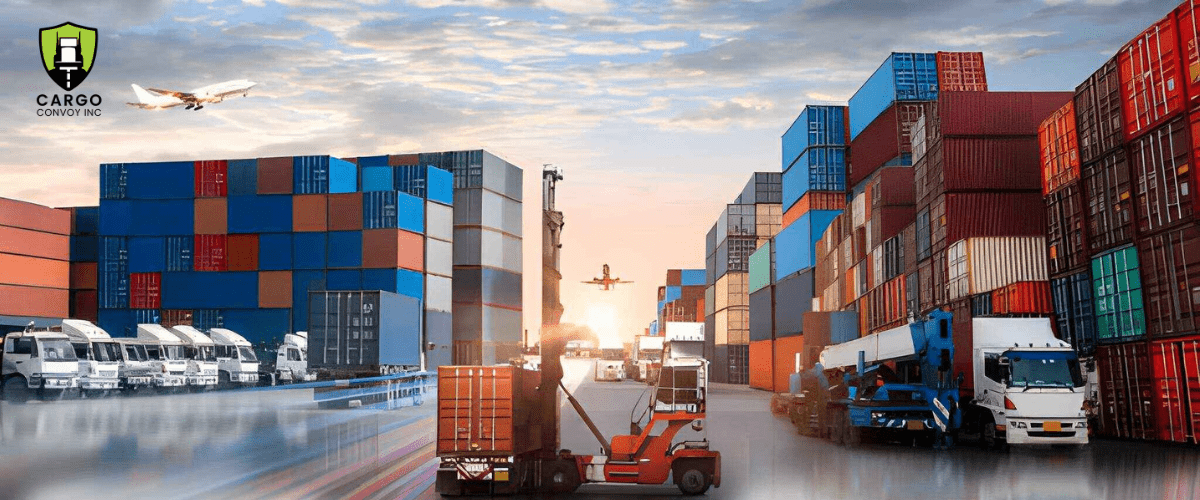
Basically, the concept of intermodal shipping is about efficiency through integration. The common movement of freight regularly consists of transferring items from one transport mode to another — for instance, unloading items from a ship to a truck, then to a train, and so on. This type of process can take time, be labor-intensive, and highly prone to loss or damage.
While intermodal shipping can simplify this journey. Cargo is packed within standardized containers — mainly 20- or 40-foot units — which can be placed and lifted across different modes of transport without unpacking the contents. Whether the container is on a freight train, a truck, or a vessel crossing the ocean, it stays secure and sealed throughout the whole movement.
However, it’s more than just containers. Intermodal shipping incorporates:
This integration helps the freight planners to strengthen the route design, which makes the best use of every transport mode— like flexibility of trucks and cost-effectiveness of rail — while avoiding its weaknesses, like truck traffic congestion across long hauls. And in this process, the goods remain untouched — minimizing handling risks and speeding up transit times.
When organizations assess their logistics strategies, there are different key factors that drive decision-making: scalability, cost, speed, reliability, and sustainability. The intermodal container shipping checks all of these boxes and then some. So, let’s start with how this freight solution can foster long-distance transport practically:
a. Cost Efficiency Through Mode Optimization
The most compelling advantages of the intermodal freight shipping are its potential for cost savings. The long-distance shipping by truck can be expensive because of the cost of fuel, driver wages, maintenance, and tolls. Compared to the rail transport — mainly the overlong distances — which is significantly cost-effective and fuel-efficient. Intermodal shipping integrates the best of both of the modes. For the longest legs of the journey, cargo moves by sea or rail, leveraging lower costs per-mile. This approach can reduce costs for overall transportation without compromising performance during delivery.
b. Enhanced Reliability & Transit Predictability
Due to intermodal shipping, which minimizes handling, there are few probabilities for delays, errors, or harm brought on by means of transfers of cargo. Containers additionally continue to be invulnerable and sealed from the starting point to the destination, decreasing the threat of misplacement or loss.
c. Environmentally Friendly Logistics
Sustainability is now becoming the central dynamic for global supply chains — it’s a business imperative. Intermodal shipping significantly lowers the footprint of carbon in freight movement due to sea or rail transport lowering greenhouse gases per ton-mile more than just trucking.
d. Scalability and Flexibility
Intermodal freight shipping can adapt to different supply chain needs and shipment volumes. Whether a business moves hundreds of containers or a few, the intermodal network scales accordingly. At the time of fluctuating demand or peak seasons, intermodal shipping can offer flexibility that a single-mode transport cannot easily match.
However, the intermodal networks are expanding rapidly. With the growing infrastructure of ports and improvements of rail corridors, more regions are connected than ever before, giving shippers competitive pricing and increased routing options.
While the intermodal freight shipping theory sounds straightforward, its execution includes coordinated planning, real-time logistics management, and specialized infrastructure. Moreover, here is a step-by-step overview of how the intermodal shipment gets unfolds:
In this journey, advanced logistics technology may allow tracking the status and location of the containers, which gives shippers complete visibility from beginning to end. This coordination level is one of the reasons why intermodal shipping has become a powerful solution in long-distance freight.
Over industries — from automobile and retail to agriculture and manufacturing — agencies are an increasing number turning to intermodal delivery for their desires of long-distance freight. The reasons are increasingly strategic, practical, and measurable:
As global commerce expands continuously, the demand for long-distance freight will only increase. Traditional single-mode transport strategies, although valuable, can no longer handle the full spectrum of cost, reliability, efficiency, and sustainability that existing day furnish chains require.
Intermodal transport stands out as a future-ready freight reply — one that integrates the strengths of rail, truck, and sea to create a cohesive, great logistics network. For organizations and logistics companies like Cargo Convoy, adopting intermodal container transport functionality imparts buyers’ preferences that are smarter, leaner, and more aligned with the realities of global trade.
When groups ask, “What is intermodal shipping and why do we have to care?” the reply is clear: it’s no longer definitely any different transport preference — it’s a whole approach to freight that enhances long-distance transport performance even as reducing charge and environmental impact. In a technology of rapid change and fierce competition, the corporations that consist of intermodal freight shipping will be well-positioned to lead, thrive, and adapt.


30 March, 2026

27 March, 2026

24 March, 2026

20 March, 2026
16 March, 2026