
Why Supply Chain AI Fails Despite Advanced Technology
Many projects fail because the business has not prepared its data, people, processes, or systems for real use. The biggest supply chain AI challenges are rarely about the model alone. AI in supply chain management works when it helps people make a clear decision at the right time. It fails when the tool adds work, produces advice no one trusts, or sits outside daily operations.
Quick Answer
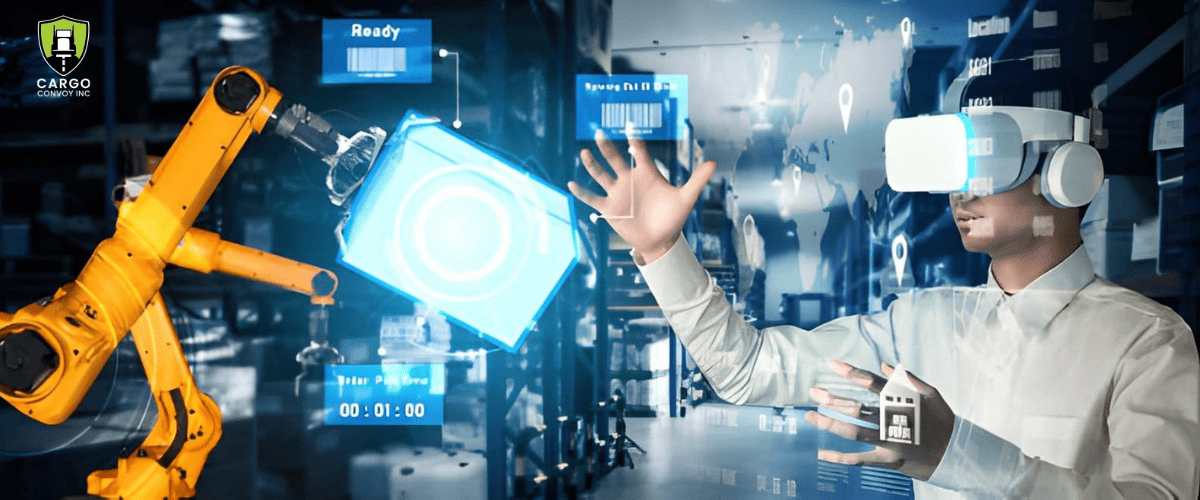
Supply chain AI fails when companies use it before fixing operating gaps. Some of the common supply chain risks involving AI are:
- Lack of clarity on business goals
- Bad quality or lack of data
- Not real time systems
- Inappropriate recommendations for everyday activities
- User mistrust
- No owner post implementation
1. Teams Start With Technology Instead of the Decision
Many businesses invest in AI because competitors use it. They want demand forecasts, route suggestions, stock alerts, or supplier risk scores. Yet they do not define the exact decision the tool must improve. This creates early supply chain AI challenges. “Improve planning” is not a useful goal. “Reduce stockouts for priority products” is clear. “Help buyers identify delayed orders before delivery dates move” is also clear.
Every project needs answers to four questions:
- Which decision will AI support?
- Who will use the recommendation?
- What action can that person take?
- Which result will prove success?
AI in supply chain management becomes easier once everyone is focused on a single result, which could be reduced inventory shortages and reduced transportation costs.
2. The Data Does Not Reflect Reality
AI learns from the input data. However, it cannot verify whether this data is compatible with the warehouse, the supplier, or transportation routes.
Typical data problems are:
- Supplier duplication
- Product name variations
- Problems of old lead times
- Delivery acknowledgments that were not sent
- Inventory data without allocations
- Demand patterns with abnormal occurrences
They are significant AI issues in logistics because incomplete data results in faulty recommendations. A model may recommend stock that is already available elsewhere. It may flag a supplier issue that the team has already resolved. AI supply chain risks increase when data cleanup becomes a one time IT task.
3. Separate Systems Slow Down Action
Logistics AI challenges appear when systems do not share data at the right time. A model may use yesterday’s inventory position or miss a new shipment delay.
The result is clear:
- Planners receive stale alerts
- Buyers compare several reports before acting
- Teams return to spreadsheets
- Managers lose confidence in the output
AI in supply chain management needs connected data flows. The tool does not need every data point on day one. It needs reliable information for the decision it supports. These supply chain AI challenges need fixing before a wider rollout.
4. The Recommendation Sits Outside the Workflow
A prediction matters only when someone acts on it. Many projects fail because the AI tool lives in a separate dashboard that users rarely open. A planner may see an alert but still need to check stock, review orders, contact a supplier, and update the system manually. The tool adds another task instead of removing one. These supply chain AI challenges make adoption fall quickly.
Useful recommendations need:
- Clear reason for the alert
- Recommended next action
- Direct way to approve, reject, or escalate it
- Record of what happened next
This reduces logistics AI challenges because the tool supports real work instead of creating another screen to manage. It also limits the AI Supply Chain Risks created by delayed action.
5. People Do Not Trust the Output
Planners, buyers, and transport teams often know details the model cannot see. They may know that a supplier has added capacity. They may know a delay will clear soon. And they may know an order can wait.
Trust improves when users can see:
- Data behind the recommendation
- Reason the model flagged an issue
- Expected impact of the action
- Option to override it with a reason
- Result after the decision
Logistics AI challenges get worse when leaders force users to follow an unexplained system.
6. AI Automates a Broken Process
AI cannot fix unclear approval rules or weak planning processes. It can only move a broken process faster. This is one of the supply chain AI challenges that technology teams cannot solve alone.
Before automation, teams need to review:
- Decision rules
- Approval limits
- Escalation steps
- Exception workflows
- Data ownership
- Human review points
This work reduces AI Supply Chain Risks. It shows where automation is safe and where human judgment must stay involved.
7. Ownership Ends After the Pilot
The success of the pilot can be attributed to the fact that it is under the watchful eyes of a few individuals. It becomes less valuable after its implementation due to the lack of quality control. There is a requirement for an owner of AI in supply chain management to link up various departments including operational, technical, financial, and data. It is necessary to assess how frequently users accept AI suggestions and their reasons for not accepting them.
Continuous control consists of:
- Data quality assessment
- Model accuracy monitoring
- User override assessment
- Rule update when there are changes in suppliers/products
- Business result measurement
- Unusual results reporting
The absence of such actions leads to increasing AI supply chain risks. Without this work, AI Supply Chain Risks increase over time. Supply chain AI challenges need ongoing ownership instead of a single launch plan.
How to Make Supply Chain AI Work
Companies can avoid many failures with a focused approach:
- Choose one high value decision
- Use data that operations teams have checked
- Fit the recommendation into the existing workflow
- Keep people involved in exceptions
- Track results after launch
- Improve the system through user feedback
The goal is not to replace every decision. The goal is to help teams act faster and with more confidence when the right data is available.
Conclusion
Advanced technology cannot solve unclear processes or disconnected teams. Real value comes when AI supports a defined decision, uses reliable data, and fits the way people already work. For Cargo Convoy, the lesson is clear. AI can improve supply chain decisions when the business treats it as an operating capability, not only a technology project. Start with one decision. Give teams useful context. Keep control in place. Then scale what proves value. This practical approach also reduces logistics AI challenges before they become costly failures.
RECENT POST
-

Why Businesses Choose Profe...
13 October, 2026
-
AI Automation for Freight B...
05 October, 2026
-

How Supply Chain Agility He...
25 September, 2026
-

Agricultural Logistics Guid...
18 September, 2026
-

How Multimodal Freight Netw...
14 September, 2026